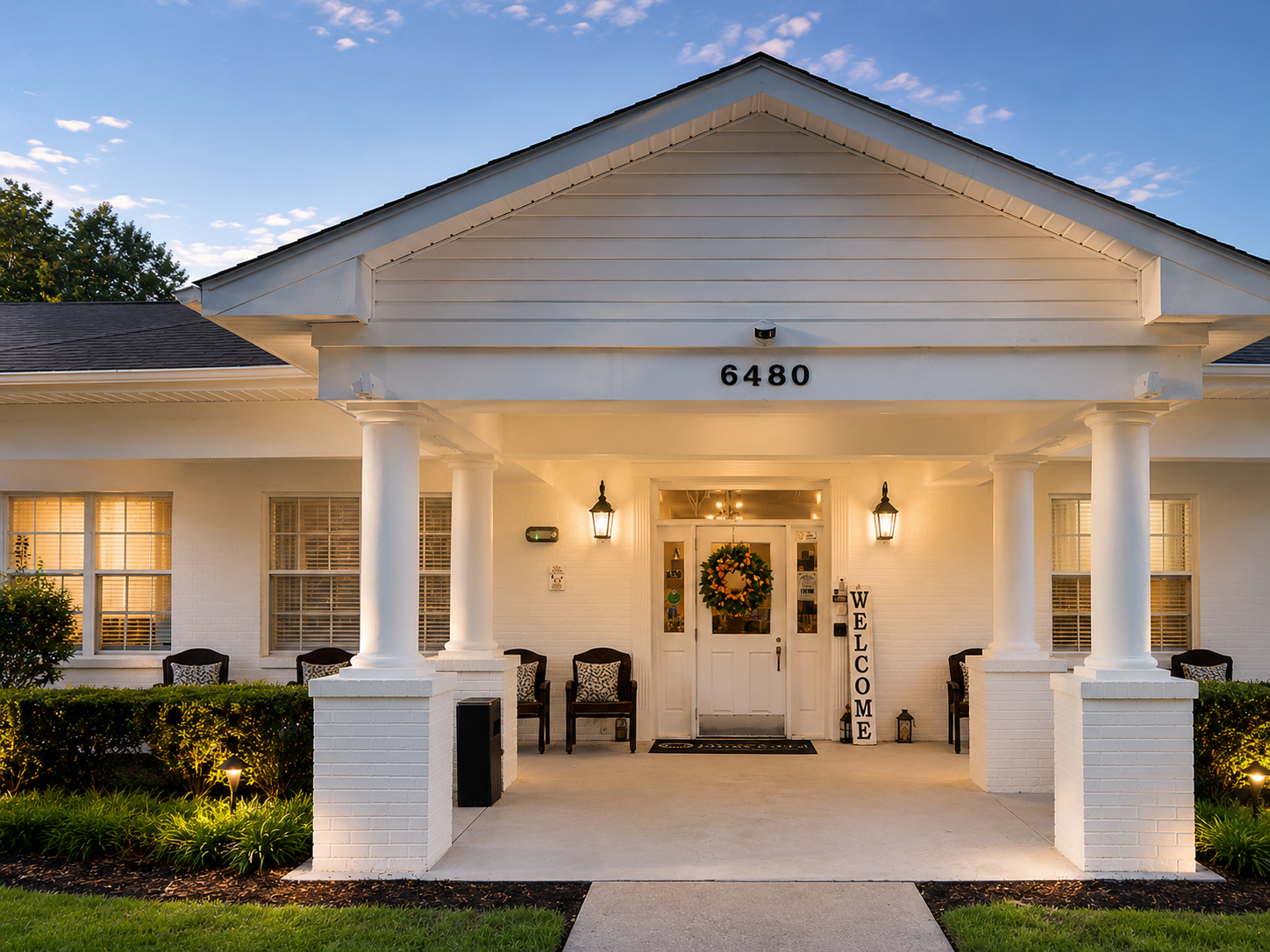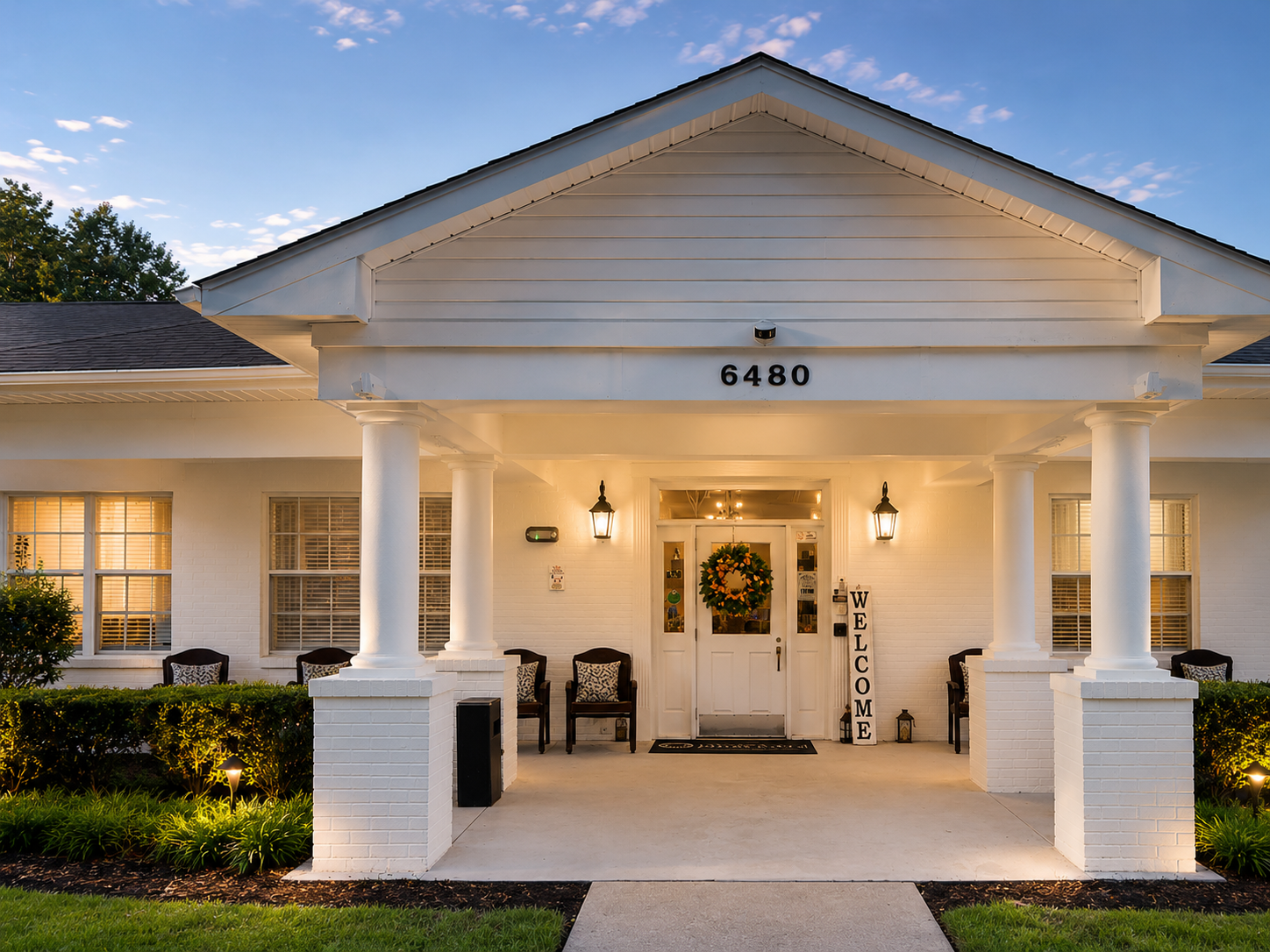
When a parent needs more help than home can give, most families start their search the same way: close to where everyone already lives. In the eastern half of Shelby County, that usually means East Memphis, Germantown or Collierville. Those communities sit near one another, and on a map nearly every assisted living option in the area can look "close enough."
Distance is a good place to start, but it is only the first filter. This guide walks through how to narrow a list of nearby communities into one or two good fits, using the questions that matter after move-in day, not just before it.
Start with the person who will visit most
The right location is usually the one that makes visiting easy for the family member who will visit most. That person will also pick up the calls, attend care meetings and drop off the forgotten reading glasses. A community fifteen minutes from one sibling and forty from another changes who carries the load.
- Drive it at the time you would actually go. A route that takes ten minutes on a Sunday morning can feel very different at 5:30 on a weekday along Poplar Avenue or the interstate. Make the trip once at your real visiting hour before you decide.
- Think about the second visitor. Grandchildren, an old friend who no longer drives at night, a sibling who flies in for holidays. Easy parking and a simple route help everyone come more often.
- Plan for urgent trips. Ask yourself how long it would take to get there if the community called on a weekday afternoon.
Keep your parent's life close, too
A move goes more smoothly when the rest of a parent's life does not have to move with them. Before you compare buildings, write down what already fills their week: the doctors they trust, their pharmacy, a standing lunch with friends, a club, a favorite barber or salon, the places and people they look forward to.
Then ask each community how those pieces fit:
- Can your parent keep their current doctors? How are appointments scheduled, and who goes with them if family cannot?
- Does the community arrange transportation, and to where? Ask what is included and what costs extra.
- Can friends and family join for a meal or an activity?
Staying near familiar routines will not solve everything, but it gives a parent something to hold on to during a big change.
Know what you are comparing
The National Institute on Aging describes assisted living as housing for people who need help with daily tasks but not the level of medical care a nursing home provides. Residents usually have their own room or apartment and share common areas. Communities often provide meals, help with personal care and medications, housekeeping and 24-hour supervision. The NIA notes that communities range from about 25 residents to 100 or more.
In Tennessee, assisted living communities are licensed as assisted care living facilities by the state Health Facilities Commission, under Chapter 0720-26 of the Tennessee rules. That is a different license from a nursing home. When you search near East Memphis and Germantown, you will see assisted living, memory care, nursing homes and continuing care campuses mixed together in the results. Sort them by the level of care your parent needs today and is likely to need in the next few years.
If memory loss is part of the picture, ask whether a community has a dedicated memory care neighborhood and how it differs from the rest of the building. Our guide to assisted living vs. memory care explains the difference in more detail.
Check the record, not just the brochure
Licensed communities in Tennessee are inspected by the Health Facilities Commission, which publishes inspection and enforcement reports. Families can also ask a community directly, and a good community should be comfortable sharing its most recent survey and explaining anything it corrected.
- Ask for the latest state survey. The Alzheimer's Association recommends asking every community for its most recent survey or inspection report. As of November 8, 2026, the Health Facilities Commission's provider information page lists facility survey findings as temporarily unavailable online, so asking the community directly may be the fastest route.
- Know who to call with a concern. Tennessee's Long-Term Care Ombudsman Program advocates for residents of nursing homes and assisted care living facilities and can explain the admission process and the rules that apply. The district ombudsman list shows the office that covers Shelby County. The Commission also explains how to file a complaint about a licensed facility.
- Ask about leadership. How long have the executive director and the nurse leader been in their roles? Turnover at the top is worth asking about directly.
Notice the size and the feel
Communities in the area range from small, home-like buildings to large campuses with several levels of care. Neither is right for everyone. A larger campus may offer more on-site services. A smaller community may feel quieter and more personal, with staff who get to know each resident's habits.
Pay attention to how your parent reacts. Do they relax in the dining room, or pull back from the noise? Do they light up when they see a garden or a porch? Their comfort matters more than any amenity list.
Be honest about the budget early
Cost comes up on every tour, so it helps to know the general range before you go. In the CareScout 2025 Cost of Care Survey, released March 2, 2026, the national median for an assisted living community was $6,200 a month. Prices vary widely by community, apartment type and level of care, so ask every community the same questions:
- What does the monthly rate include, and what is billed separately?
- How is care priced, and how is the price adjusted when needs change?
- Are there one-time fees or deposits, and are any refundable?
- How have rates changed over the past few years?
- How is the community paid for?
That last question matters more than many families expect. According to the NIA, most people pay for assisted living out of pocket, and Medicare.gov explains that Medicare does not cover long-term custodial care. Communities differ on whether they work with any outside programs or insurance at all. Some are private pay only, and The Pointe at Kirby Gate is one of them. If your family is counting on a benefit program or an insurance policy, confirm how it works with a benefits counselor before you tour. In Shelby County, the Aging Commission of the Mid-South offers free benefits screening. Our guide to paying for senior living explains the common options in plain language.
Our own rates are published on our Rates & Floor Plans page, so you can compare before you visit.
If your parent has memory loss
For a parent living with Alzheimer's or another dementia, the Alzheimer's Association suggests looking closely at a few things:
- Whether the layout is easy to understand, and whether indoor and outdoor spaces are secure.
- What dementia-specific training staff receive, how long it lasts and what it covers.
- Whether residents can bring familiar things, like photos or a favorite chair.
- Whether daily schedules can bend to a person's own rhythm, and whether personal care is done with dignity.
- How families are included in care planning and told about changes.
The Association also recommends visiting more than once, at different times of day and around a meal. For a parent with dementia, a short drive matters even more, because it makes frequent, shorter visits practical for the whole family.
Try it before you decide
If your parent is unsure, a short stay can answer questions a tour cannot. Many communities offer respite stays: a furnished suite, meals and care for a set number of nights. Families use them as a trial run, as a break for a tired caregiver, or after a hospital stay. At The Pointe at Kirby Gate, respite stays have a 7-day minimum; details are on our respite care page.
A simple checklist for comparing nearby communities
- Drive time for the family member who visits most, at the hour they would actually go
- Distance to your parent's doctors, pharmacy and weekly routines
- Transportation to appointments: what is included and what costs extra
- Level of care offered today, and what happens if needs increase
- Dedicated memory care, if memory loss is part of the picture
- Most recent state survey, and how any findings were corrected
- Tenure of the executive director and nurse leader
- What the monthly rate includes, and every add-on or fee
- How the community is paid for, confirmed with a benefits counselor if needed
- A meal eaten in the dining room
- How your parent felt during the visit
For more questions to bring along, see our assisted living tour checklist.
Come see us on Quince Road
The Pointe at Kirby Gate is an assisted living and memory care community with 60 residences on Quince Road in East Memphis, an easy drive from Germantown and Collierville. If you are comparing communities in this part of town, we would be glad to answer your questions, including the hard ones. Call us at (901) 753-3449 or schedule a private tour, and plan to stay for lunch.
This article is general information, not medical, legal or financial advice.